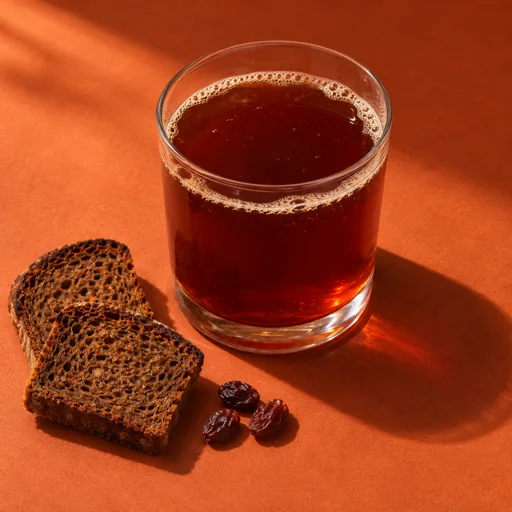
Classic dark Russian kvass
A chilled Russian bread kvass with a deep toasted rye flavor, a little sweetness, and a gentle fizz.
- Hands-on time
- About 20 min, plus 30 min of toasting
- Waiting time
- 8 hr to steep, 6 hr to ferment, and 24 hr to chill
- Ready when
- After the short ferment, look for fine bubbles and a lightly yeasty aroma. Strain and chill before serving.
- Difficulty
- Beginner
- Makes
- About 2–2½ L
Ingredients
- ½ lb (225 g) dark Russian rye bread or dense 100% rye bread
- 11 cups (about 2.6 L) water, divided, plus 1 tbsp for the yeast
- 1½ cups (300 g) granulated sugar, divided
- 15–20 raisins
- Half a standard 7 g packet of active dry yeast (about 3.5 g)
Equipment
Baking sheet, large stockpot, small saucepan, fine sieve, clean cheesecloth, and a clean 1-gallon jug or pitcher with a loose cover.
Method
- Heat the oven to 350°F (175°C). Slice the rye bread and toast it on a baking sheet for about 30 minutes, until it is crisp and deeply browned. Pull it out before it blackens.
- Bring 10 cups of water to a boil and take the pot off the heat. Add the toast and raisins. Cover the pot, cool it promptly in an ice-water bath, then refrigerate the covered mixture for about 8 hours to draw out the flavor.
- Lift out and discard the bread. Transfer the infusion and raisins to the clean jug and let the liquid come to room temperature. Warm the remaining cup of water with the sugar, reserving ½ teaspoon of sugar for the yeast. Stir until dissolved and cool the syrup to room temperature.
- Mix the yeast with 1 tablespoon of lukewarm water and the reserved sugar. When it looks foamy, stir it and the cooled syrup into the jug. Cover with a clean cloth secured with a band and ferment at room temperature for about 6 hours.
- Strain out the raisins and any sediment through a cheesecloth-lined sieve. Refrigerate in a clean, loosely covered pitcher for 24 hours, then pour and serve cold.
Recipe reference: Valerie Stivers in The Paris Review
See also Elena Molokhovets’s 1901 cookbook — historical bread kvass
More kvass recipes
Drinks
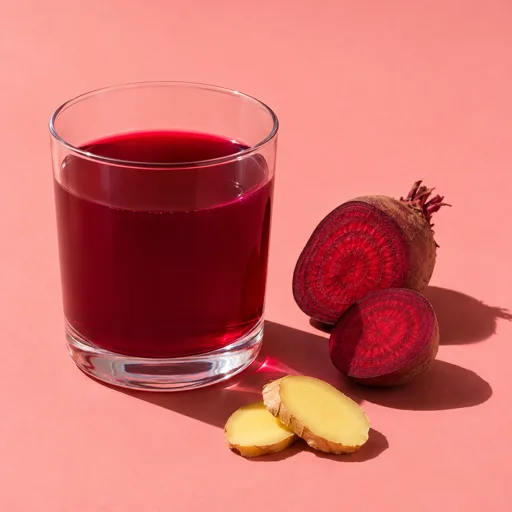
Beet and ginger kvass
An earthy, tart beet drink with a little fresh ginger and a ruby-colored brine.